Service Crystallography
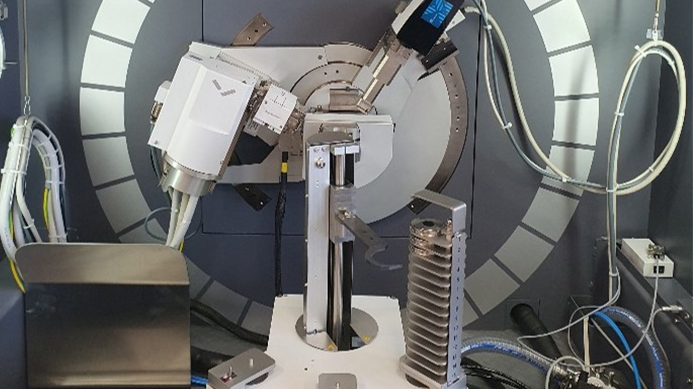
DTU Chemistry performs X-ray crystallography. This method elucidates the atomic construction of substances in their solid phase such as crystals or fibers. When a crystal or a fiber is irradiated with X-ray, it emits a diffraction pattern. An analysis of this pattern provides insights into the three-dimensional arrangement of atoms in the material.
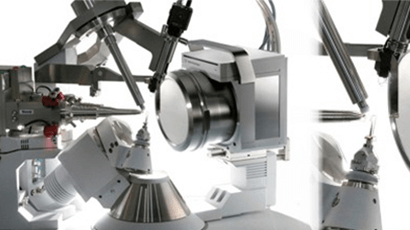
Here, we utilize the XtaLAB Synergy-S Rigaku single crystal diffractometer. This instrument comprises a four-circle kappa-goniometer combined with a HyPix-Arc 100°, Hybrid Photon Counting (HPC) detector and single microfocus sealed-tube x-ray sources (Cu λ = 1.54184 Å) with high-precision multilayer mirror focusing optics. It is used for solving X-ray single crystal structures of both small molecule and protein crystals. The diffractometer is set up with a cryo cooling system covering -173 to 202 °C. The single-crystal samples (less than 0.2 mm) are mounted either on a glass tip or in a loop which are placed on a goniometer head.
The facility also provides comprehensive powder diffraction analysis services. The technique involves irradiating a sample with X-rays and analyzing the resulting diffraction pattern to obtain information about compounds (crystallographic phases) present in the sample, identification of impurities, unit cell parameters, and crystallite sizes.
For this, we utilize third generation Empyrean, Malvern Panalytical diffractometer, equipped with a 1Der-detector specifically designed for investigating the crystallographic properties of powdered materials (Cu λ = 1.5406 Å). The diffractometer operates in reflection mode with a 2θ range of 3-168° 2θ and transmission mode with a 2θ range of 0.5-80°. The Anton Paar TTK 600 chamber enables sample studies in temperatures between -173 and 600°C as well as under non-ambient conditions.
Our expertise includes:
- Analyzing a wide range of powder samples, including MOFs, ceramics, minerals, nanomaterials, and pharmaceuticals.
- Employing advanced techniques like Rietveld refinement for accurate structural analysis.
- Providing expert interpretation of diffraction data and assistance in selecting the optimal measurement parameters based on specific samples and research questions.
DTU Service Crystallography offers structure-solving services for both academia (DTU and external users) and industry.
Contact
Mariusz Grzegorz Kubus Instrumentation Manager Department of Chemistry Mobile: +45 93518974 makub@kemi.dtu.dk
Supporting Computer Programmes
MyCrystals
The program is developed by Monika Nøhr Løvgreen, Mikkel Løvgreen, Hans E. M. Christensen and Pernille Harris at the Department of Chemistry at the Technical University of Denmark. Journal of Applied Crystallography has accepted a descriptive note of the program: J. Appl. Cryst. (2009) 42, 741-742.
Version: 08/02/2010


Winprep
Program for visualising and handling powder diffraction patterns. The program is developed by Kenny Ståhl.
Version: 29/7/2011

Manual Download


Debye
Simulation program for powder diffraction. The Debye simulation program calculates the XRPD pattern from a crystalline sample by summing over all interatomic distances as stated by the Debye equation (Debye, Ann. Phys. 46 (1915) 809. The program is developed by Jette Oddershede and Kenny Ståhl.
Version: 03/12/2007

Manual Download